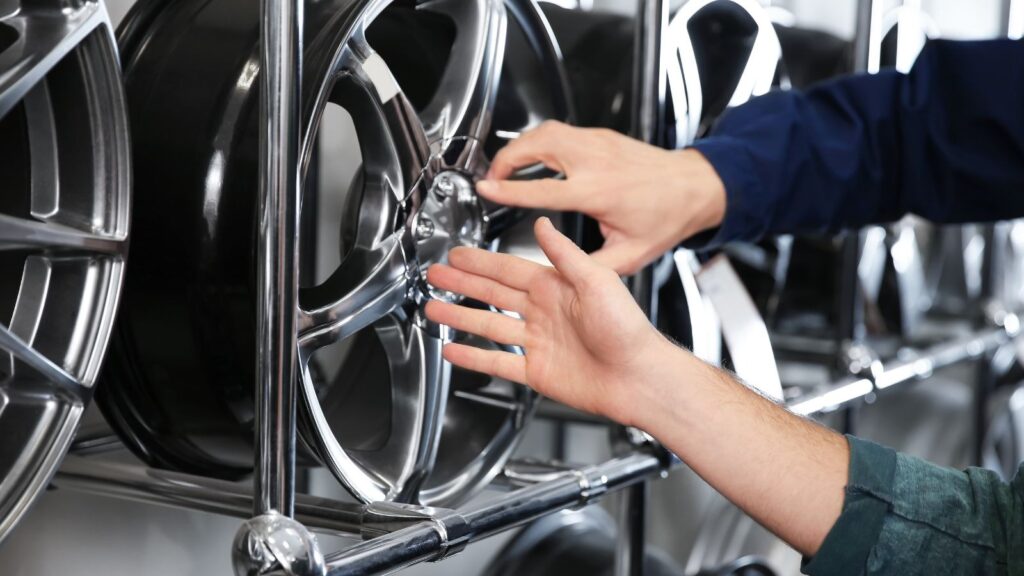
Custom alloy wheels look simple from a distance: a round shape, some spokes, a shiny finish. But the way a wheel actually performs on the road depends on details most drivers never think about. How well it centers on the hub, how evenly it distributes braking heat, how it resists warping under load. These outcomes trace back to the manufacturing process, particularly the machining stage that shapes the wheel after it’s cast or forged.
Machining is where rough metal becomes a finished, functional component. It’s the step that determines whether a wheel bolts on cleanly, spins without vibration, and holds its shape over years of driving. Understanding how this process works reveals why some wheels feel noticeably better than others, even when they look nearly identical on a showroom floor.
Why Center Bores And Bolt Patterns Demand Exact Cuts
The center bore is the hole in the middle of a wheel that fits around the vehicle’s hub. If this hole is even slightly off in diameter, the wheel won’t sit perfectly centered, which can cause vibration at highway speeds. Machining this bore to a precise tolerance is what allows the hub, rather than the lug bolts alone, to bear the wheel’s weight correctly.
Bolt patterns follow a similar logic. The holes where lug bolts pass through must align exactly with the vehicle’s hub, both in spacing and depth. A pattern that’s off by even a millimeter can strip threads, cause uneven clamping force, or create a wheel that appears to fit but doesn’t seat properly under load.
This is where precision CNC machining earns its reputation for reliability, and readers looking to dig deeper into the process can find useful background there. In automotive CNC machining, computer-controlled cutting tools follow programmed paths with extreme repeatability, meaning the tenth wheel produced in a batch has the same bore and bolt geometry as the first. Manufacturers relying on this level of cnc machining accuracy can hold tolerances that manual drilling or casting alone cannot consistently achieve, which matters enormously when a wheel must fit multiple vehicle models with different hub specifications.
How Offset Machining Shapes Handling And Fitment
Offset refers to the distance between a wheel’s mounting surface and its centerline, and it has a direct effect on how a car handles. A wheel with the wrong offset can push the tire too far outward, straining suspension components, or pull it inward, reducing stability in corners. Machining the mounting face and hub area determines this offset with a level of accuracy that visual inspection simply cannot verify.
Custom wheel makers often produce multiple offset variations from the same base casting to fit different vehicle platforms. This is only possible because the machining stage, not the casting mold, does the fine-tuning. A single mold can yield wheels for a sedan and a lifted truck simply by adjusting how much material is removed from the back face during finishing.
Getting this wrong has consequences beyond poor handling. Incorrect offset increases scrub radius, which changes steering feel and can accelerate wear on bearings and tie rods. Wheel manufacturers test offset tolerances closely because a fraction of a millimeter of variance across a full set of four wheels can produce noticeably uneven handling from one side of the vehicle to the other.
What Surface Finishing Reveals About Wheel Quality
After the structural cuts are made, machining also shapes the visible surface of the wheel. Lathe-style finishing, often called a diamond cut or polished lip, removes a thin layer of the cast or forged surface to reveal bare aluminum underneath. This creates the bright, reflective edge seen on many custom wheels, distinct from the painted or clear-coated sections.
This finishing step isn’t purely cosmetic. CNC machining aluminum surfaces smooths out microscopic imperfections left over from casting, which can otherwise trap moisture or promote corrosion over time. A cleanly finished surface also seats gaskets and seals more evenly, which matters for wheels used in tubeless tire setups where air retention depends on a flush contact surface.
Not every wheel on the market goes through full machining at every stage. Many alloy wheels are cast into their basic shape and then machined only at critical contact points, such as the hub and bolt holes, while broader surfaces are left as cast or finished by other methods. The extent of machining varies by manufacturer, price point, and intended use, so buyers should not assume every wheel labeled “custom” received identical treatment.
The Lasting Value Of Machining Accuracy In Wheel Manufacturing
The difference between a wheel that performs flawlessly and one that causes subtle vibration or premature wear often comes down to machining accuracy measured in fractions of a millimeter. From center bores that keep a wheel centered on the hub, to offsets that preserve proper handling, to surface finishes that protect against corrosion, machining shapes nearly every functional aspect of a custom alloy wheel long after the initial casting or forging is complete. Buyers who understand this process gain a better sense of what separates a well-made wheel from one that merely looks the part.