Everyone worries about the driver on a long trip. Fewer people stop to think about what’s happening in the other seats — and that’s a mistake. The passenger side of a road trip carries more influence over safety than most of us give it credit for.
Why Passenger Behavior Matters More Than You Think
A driver’s focus is only as good as the environment around them, and passengers are a big part of that environment. Someone who stays calm and alert helps a driver keep their eyes where they belong. Someone who’s loud, distracting, or glued to their phone in the wrong moment can do the opposite — sometimes without realizing it.
This isn’t just a hunch. It shows up in the numbers, too.
Where you sit, how you act, and even which state you’re driving through can shift your odds in a crash more than people expect. A look at passenger crash risk data makes that pretty clear — some seating positions and some states carry noticeably more risk than others. Which is exactly why the small habits below matter as much as they do.
The Passenger’s Real Job
Riding along isn’t a passive role. A good passenger is buckled in, tuned in, and helping — not just occupying a seat.
Buckle Up Every Single Time
This one’s non-negotiable, and the numbers back it up. According to the National Highway Traffic Safety Administration, seatbelts cut the risk of fatal injury by roughly 45% for people in the front seat.
Rear Seats Aren’t “Safe by Default”
A lot of people treat the back seat like a safety exemption. It isn’t. An unbelted rear passenger can turn into a projectile in a crash — putting everyone else in the car at risk, not just themselves.
Make It a House Rule
Here’s a simple fix: nobody moves until every belt clicks. Say it out loud before the trip starts. It sounds obvious, but making it a stated rule — not just an assumption — removes the awkward moment where someone has to speak up mid-drive.
Keep the Driver’s Environment Distraction-Free
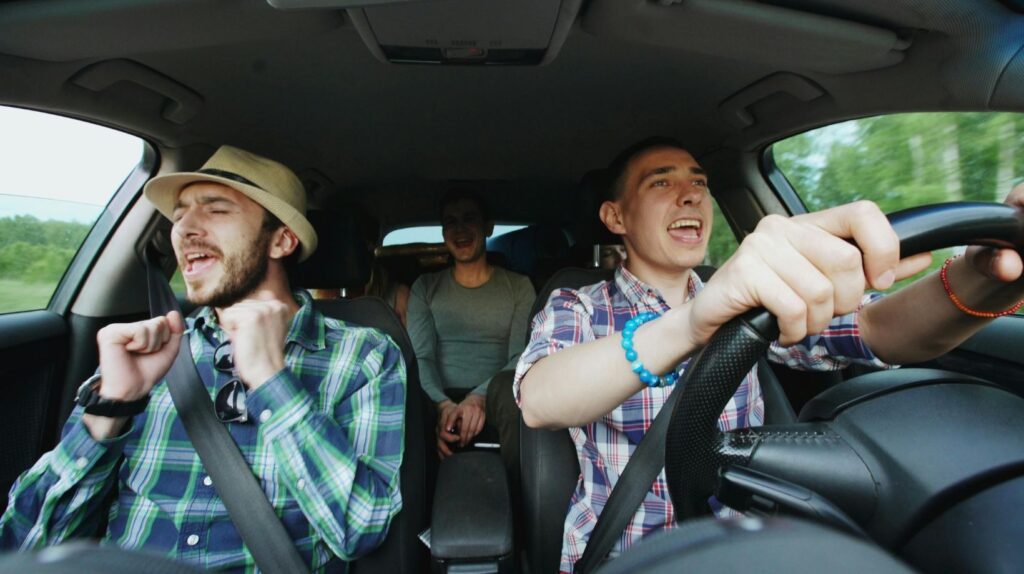
Attention is finite, and every passenger is competing for a slice of it. A shouted argument, a sudden movement, someone shoving a phone screen toward the driver — these all pull focus away from the road, even for a couple of seconds. And a couple of seconds is all it takes.
Manage the Media and the Mood
Volunteer to run the music, the GPS, or the snack rotation. Little logistics like adjusting the AC or passing a water bottle add up, and taking them off the driver’s plate means one less thing splitting their attention.
Watch for Rising Tension
If a conversation starts heating up, it’s worth just… letting it go for now. Emotional distraction doesn’t leave skid marks, but it slows reaction time almost as much as a phone would.
Act as a Second Set of Eyes
Two sets of eyes catch more than one, especially on a long stretch of highway where fatigue starts creeping in. A passenger who points out a merging truck, a sudden brake light, or someone near the shoulder is buying the driver extra reaction time — sometimes just half a second, but that’s often the margin between a close call and a crash.
Navigate Proactively, Not Reactively
Give directions early. “Exit’s coming up in about half a mile” is far more useful than shouting “turn now!” as the sign whips past.
Monitor Driver Fatigue
Watch for the tells — drifting inside the lane, slower reactions to traffic, a string of yawns. If you spot them, say something and suggest a break. Drivers rarely admit they’re tired until it’s already a problem.
Plan Stops Before You’re Desperate
Bad decisions tend to show up right around the point where someone’s pushed too far without a break. The fix is boring but effective: plan stops ahead of time instead of waiting until someone’s exhausted.
The 2-Hour Rule
A common guideline is to stop every two hours or every 100 miles, whichever hits first. Build it into the route before you leave and treat it like part of the plan, not an option to skip if you’re “making good time.”
Share the Driving Load Early
If there’s more than one licensed driver in the car, rotate before anyone’s tired — not after. By the time someone says “I’m too tired to keep going,” the risk has already been building for a while.
Prepare for the Unexpected
Even a well-planned trip can run into car trouble, bad weather, or a medical situation nobody saw coming. A prepared passenger turns that kind of moment from a crisis into just another thing to handle.
Pack a Basic Safety Kit
Worth keeping in the car:
- A first-aid kit
- A flashlight with extra batteries
- Bottled water and some non-perishable snacks
- A portable phone charger
- Basic tools and a tire pressure gauge
Know the Emergency Basics
Know how to call for roadside help, where the hazard lights are, and how to get out of the car safely if you’re stopped on a shoulder. It’s the kind of knowledge nobody thinks about until the moment they need it — and that’s exactly when panic makes it hardest to think clearly.
Final Thoughts: Safety Is a Shared Responsibility
Road-trip safety was never just the driver’s job. It’s a team effort, and passengers hold more of that responsibility than most people realize — buckling up, staying alert, managing distractions, planning real stops instead of pushing through.
The data backs it up: where you sit and how you behave genuinely change crash outcomes. Treat safety as something everyone in the car contributes to, and every passenger becomes part of the solution instead of just along for the ride.