Spend a morning watching delivery vans in any busy Australian suburb and you’ll notice something fairly quickly. The hardest part of the job often isn’t carrying stuff. It’s getting the van close enough to the door. Narrow laneways, underground car parks, impatient traffic and someone who has decided the loading zone is a perfectly acceptable place to grab coffee all make life interesting. That’s the sort of environment the Farizon V7E has been built for, with a compact footprint and an electric drivetrain aimed squarely at urban commercial work.
Bigger isn’t always better
Commercial vehicles tend to encourage a strange kind of thinking.
More space must be better, right?
Well, sometimes.
If you’re moving mattresses across Brisbane or hauling bulky equipment between industrial sites, absolutely. But plenty of businesses spend their days carrying parcels, tools, flowers, electrical gear or boxes of stock through streets designed long before anybody imagined a modern delivery van.
In those situations, an enormous vehicle becomes its own problem.
You’re circling blocks looking for somewhere to stop. The rear is sticking halfway out of a parking spot. That underground entrance suddenly looks suspiciously low. And the little side street your customer casually described as having “heaps of room” has about 12 centimetres to spare.
Not ideal.
The V7E uses a 3,200 mm wheelbase but still provides 6.95 cubic metres of cargo space. There’s more than 2.86 metres of internal load length too, so the compact-city idea hasn’t come at the expense of having a genuinely usable cargo area.
That balance is probably more interesting than simply chasing the biggest van available.
Think about the 47th stop, not the first one
There’s another thing vehicle brochures struggle to capture.
Repetition.
Loading something once is easy. Doing it 50 times is where seemingly tiny design choices start becoming either brilliant or incredibly annoying.
The rear load height here is 510 mm.
On paper, that’s just a measurement.
But picture someone doing parcel deliveries. Open doors. Grab boxes. Step down. Walk 20 metres. Come back. Step up. Repeat.
Again.
And again.
By mid-afternoon, you’re no longer thinking about horsepower or touchscreen size. Your knees have opinions.
A lower cargo floor can also make a difference when you’re shifting heavy tools or stock by hand. One awkward carton probably won’t bother you. After a whole morning of them, you know.
Payload is where small vans can get caught out
Compact commercial vehicles occasionally have an annoying trick up their sleeve. They give you plenty of physical room but not enough legal payload to actually fill it with anything particularly heavy.
That’s worth checking before buying.
Farizon quotes a maximum payload of up to 1,338 kg for the V7E.
That number matters differently depending on the business.
A courier might run out of cargo volume before reaching the weight limit. Someone carrying tile adhesive, plumbing equipment or boxes of beverages could have exactly the opposite problem.
And this is why guessing is a bad idea.
For a week, weigh or estimate what normally goes into the van. Include shelving and permanently installed equipment too. Actually, scratch that. Do it for two weeks if your workload changes a lot.
You might discover you need far less van than you thought.
Or considerably more.
Electric makes particular sense when the van never stops
People often talk about EVs as though their biggest advantage appears on long open roads.
City driving is arguably where things get more interesting.
Electric motors deliver torque straight away, which suits the endless accelerate, brake, accelerate pattern of urban traffic. There’s no diesel engine grumbling away while you crawl through a queue either. Farizon positions the V7E specifically for frequent stop-start work such as courier routes, service calls and last-kilometre delivery.
And quieter running isn’t just pleasant for the driver.
Imagine starting deliveries at 6am in a residential street. Nobody is going to applaud the arrival of a rattly diesel van outside their bedroom window.
Quiet is underrated.
But what about getting home?
Here comes the obvious question.
Range.
The maximum quoted electric range is 329 km, depending on the version and driving conditions.
Now, 329 km means absolutely nothing unless you compare it with your actual working pattern.
If your van covers 90 km on a busy day and returns to the same warehouse every evening, you’ve got one conversation. If your technician occasionally gets sent 220 km out of town without warning, you’ve got another.
This is where businesses should ignore the excitement around EVs for a moment and open their own records.
How far did the van travel yesterday?
What about the busiest day last month?
Where was it parked overnight?
Could you install an AC charger there?
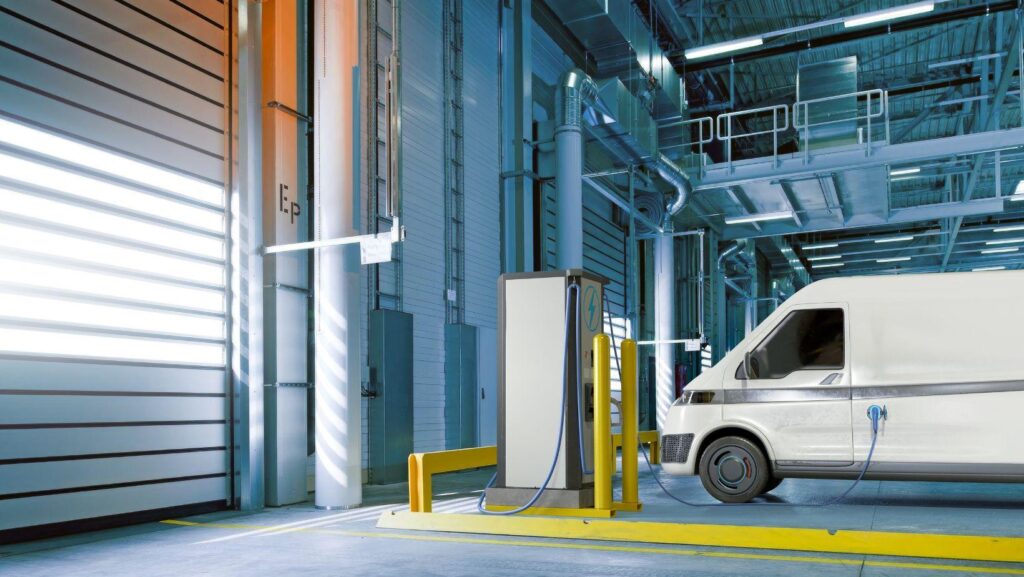
Farizon supports AC and DC charging, with 11 kW AC wall-box charging intended for home or depot use.
For predictable metro routes, overnight charging could be the simplest arrangement of all. The driver finishes work, plugs in and leaves.No petrol station detour tomorrow morning.
There’s also a 5-year/200,000 km vehicle warranty and an 8-year battery warranty, so range isn’t the only thing you’re not losing sleep over.
The boring stuff usually decides whether a van is good
That’s really the point.
A work van doesn’t need to make its owner excited every time they see it parked outside.
It needs to fit through the gate.
It needs to carry Tuesday’s workload without complaining. It needs to be easy to load when you’re tired, comfortable enough when traffic stops moving and capable of doing the route without turning charging into a daily puzzle.
The glamorous stuff wears off quickly.
A van that quietly makes an awkward working day a little less awkward?
That you’ll notice.