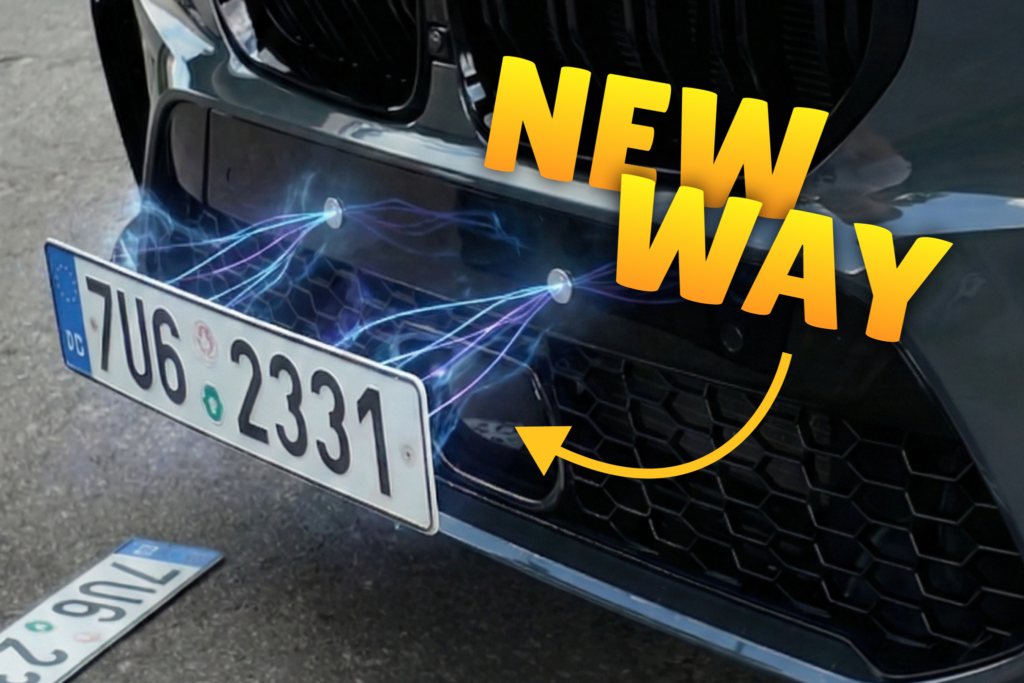
License plates have changed very little in appearance, but the technology used to mount them is beginning to evolve. The familiar combination of drilled holes, screws, and a plastic frame is no longer the only approach. New systems treat the plate mount as an engineered automotive component rather than a simple piece of hardware.
Why Traditional Mounting Is Being Rethought
For many years, installing a number plate followed the same routine. A holder was screwed to the bumper, the plate was placed inside it, and additional fasteners kept everything together. The method works, but it was developed when convenience and exterior integration were not major priorities.
A new generation of car license plate holder systems approaches the task differently. Instead of asking how to improve the traditional plastic frame, designers can reconsider whether that frame is necessary at all.
This shift reflects a broader change in automotive accessories. Components that once had a single basic purpose are being redesigned around easier interaction, cleaner installation, and more specialized engineering.
From Permanent Installation to Quick Access
One of the biggest changes concerns how drivers interact with the plate after installation. With screws, removing a plate means finding the right tool, undoing the fasteners, keeping track of small hardware, and repeating the process when the plate goes back on.
A removable mounting system turns this into a normal feature rather than a maintenance procedure.
This can be useful when:
The important development is not removal itself. Any screwed plate can eventually be removed. The difference is designing the mounting system from the beginning with repeated access in mind.
Magnetic Mounting as an Alternative
Magnets provide an interesting solution because attachment does not depend on a visible mechanical lock around the plate.
Alite Maglock is one example of this approach. The magnetic mounting system creates a connection between the number plate and the vehicle while allowing the plate to be detached and returned to its position without repeatedly removing conventional fasteners.
This changes the role of the holder. Instead of acting as a permanent plastic border, the mounting components work largely behind the plate.
It also demonstrates how a very familiar automotive part can be redesigned without changing the license plate itself. The number remains the same; the innovation happens in the interface connecting it to the vehicle.
Small Components Are Becoming More Engineered
The automotive industry has already transformed many components that once seemed too simple to reinvent. Mechanical keys became keyless entry systems. Fixed door handles became retractable. Conventional mirrors are increasingly supplemented by cameras.
License plate mounting is a much smaller category, but the direction is similar. The focus is shifting from basic attachment toward systems designed around a particular type of interaction.
The next generation of plate holders does not need to look futuristic to represent a meaningful change. Sometimes progress means redesigning a component most drivers stopped thinking about years ago. Magnetic systems such as Alite Maglock show how even the connection behind a license plate can become a more considered piece of automotive engineering.