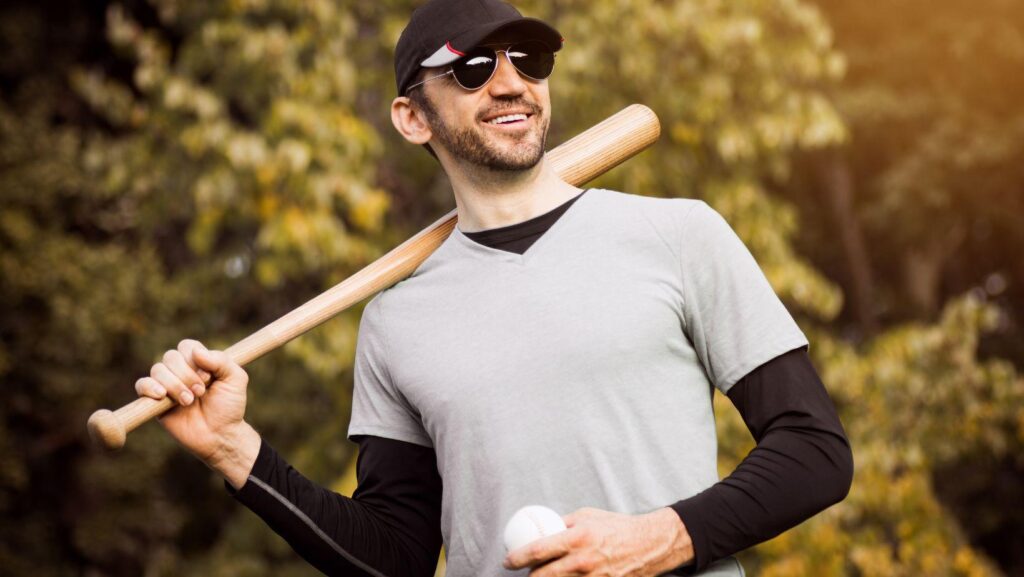
A fly ball at 2 p.m. in July is the toughest catch in amateur sports. The sun sits at an ugly angle, the ball vanishes into white sky, and the outfielder has roughly three seconds to decide whether to drift, sprint, or dive. The right pair of baseball shades will not turn a bad fielder into Andruw Jones. But the wrong pair can absolutely turn a routine can of corn into a triple off the fence.
That is the case for taking eyewear seriously, even at the little league level. What follows is a practical breakdown of what matters, what does not, and how to shop without getting talked into a $250 pair that solves problems no ballplayer actually has.
What actually matters in baseball sunglasses
Polarized lenses cut horizontal glare. That is the kind of glare that bounces off wet grass, off infield dirt after a fresh drag, off the metallic bleachers behind home plate. Polarization helps a hitter pick up spin on a curveball in bright conditions. It helps an outfielder track a ball across a reflective sky.
There is a long-running debate worth knowing about. Some coaches argue polarized lenses distort depth perception on pop-ups because they eliminate reflections the brain uses to judge distance. A 2015 study in Optometry and Vision Science tested this and found no meaningful difference in catch performance between polarized and non-polarized lenses for trained athletes. Polarization is fine for baseball, and the glare reduction is worth it for most players. If an outfielder swears pop-ups look weird through polarized lenses, that is a real perception for that individual and not a universal rule.
Tint matters more than most shoppers realize. Gray tints preserve true color, which is useful for hitters trying to pick up red seams. Amber, copper, and rose tints boost contrast against green grass and blue sky, which is why they dominate baseball-specific eyewear. A copper lens against a partly cloudy sky will make a ball pop more than a neutral gray will. Mirrored coatings on top of these tints add another layer of glare rejection, which is why so many pro outfielders wear them.
UV protection is non-negotiable. Any pair worth buying blocks 100 percent of UVA and UVB, usually labeled UV400. Cheap gas-station shades often skip this and can be worse than no sunglasses at all, because dark lenses cause pupils to dilate and let in more UV.
Fit is the whole ballgame
A lens is only as good as the frame holding it in place. Baseball involves sprinting, sliding, diving, and swinging a bat hard enough to rotate the entire torso. Sunglasses that bounce, slip down the nose, or press painfully against the temples get taken off. Sunglasses in a back pocket do not catch fly balls.
The nose bridge should sit without pinching, and rubberized nose pads keep the frame planted when sweat starts. The temple arms should hug the sides of the head without squeezing. The bottom of the lens should clear the cheekbone so a big smile or a hard sprint does not push the frames up into the line of sight.
Head size is where a lot of players get it wrong. Baseball is a sport played in caps, and cap sizes run large. A player who wears a 7 3/8 fitted cap probably needs a wider frame than the standard adult unisex size most sunglasses default to. Brands increasingly offer a large or extended fit, sometimes marketed toward big head baseball caps and helmet-friendly designs. Trying on shades while wearing the actual cap and helmet a player uses on the field is the single most useful thing a shopper can do.
For younger players, this cuts the other way. Youth baseball sunglasses are not shrunken adult frames. The proportions differ, the nose bridges sit differently, and the temple length is shorter. A 10-year-old wearing dad’s Oakleys will spend more time adjusting them than watching the ball. Purpose-built youth frames tend to have wraparound shapes, silicone grip points, and lighter overall weight.
Prescription options for players who need them
Roughly one in three American kids is nearsighted by the time they hit high school, and that number keeps climbing. Prescription baseball eyewear is a real category now, and the options have improved a lot in the last decade.
The cleanest solution for players who can tolerate them is daily contact lenses under standard sport sunglasses. That gives full peripheral vision and lets the athlete swap between shades and clear safety glasses without changing the underlying correction. For players who cannot wear contacts, prescription sport sunglasses come either as direct-glazed lenses in a wraparound frame or as a prescription insert behind a standard lens.
A caution about extreme wraparound frames: they create optical distortion at the edges when made in prescription. Players with strong prescriptions, roughly minus 3.00 and up, should look at frames with less aggressive curvature or accept that a mild fisheye effect will exist in peripheral vision. An optician who has fit sport lenses before is worth the extra drive.
For budget-minded families, there are solid options starting around $30 to $50 that hit the important marks: polarized, UV400, grippy nose pads, and a fit built for movement. Shoppers ready to buy baseball sunglasses at that price point should insist on those features before anything else, because a $200 fashion frame without them will underperform a $35 sport frame on the field every time.
Flip-ups, wraparounds, and other niche picks
Flip-up frames have a specific and enduring appeal, particularly for catchers and infielders who need to switch between shaded and unshaded vision on the same play. Picture a ground ball hit into the shadow of the grandstand while the fielder was tracking a runner in bright sun. Fixed lenses cannot solve that. A flip-up can. The tradeoff is bulk. Flip-ups sit further off the face and can feel top-heavy, so for outfielders who stay in the sun all game, a standard sport frame is usually more comfortable.
Wraparound frames dominate the outfield market for good reason. They block peripheral light, sit close to the face, and stay put during a full sprint. Shield-style lenses, the single-piece designs popular in cycling, are creeping into baseball too. They offer maximum coverage but can fog in humid conditions, so ventilation matters. Frames marketed for the outfield often include venting channels near the top of the lens to help with fogging when the player is breathing hard on a warm night.
Men’s sizing in baseball sunglasses tends to run wider and slightly heavier than unisex adult sizing, which suits players with larger head shapes or those wearing a helmet over the frames.
Durability and replacement
Baseball is rough on gear. Sunglasses get sat on in dugouts, dropped in the on-deck circle, and occasionally hit by foul balls. Assuming any pair will last five seasons is optimistic. Frames with replaceable lenses extend the useful life significantly, and a hard case in the equipment bag prevents most routine damage. Silicone nose pads and temple grips wear out faster than the frame itself and can sometimes be replaced separately.
Warranty policy is the piece most shoppers ignore. A brand that will replace a lost or damaged pair at a reasonable cost is worth a small premium over one that treats every purchase as final. Youth players in particular go through gear at a rate that would horrify adults, and building a replacement pipeline into the purchase decision is smarter than pretending it will not happen.
Getting it right
Polarized lenses with a contrast-boosting tint. Full UV protection. A frame sized to the actual head wearing it. Grippy contact points that survive sweat. A price that reflects how often the things will get sat on. Everything past that is preference, and preference is where the arguments in the dugout come from. A catcher who loves flip-ups and an outfielder who lives in wraparounds are both playing the same sport with different problems to solve.