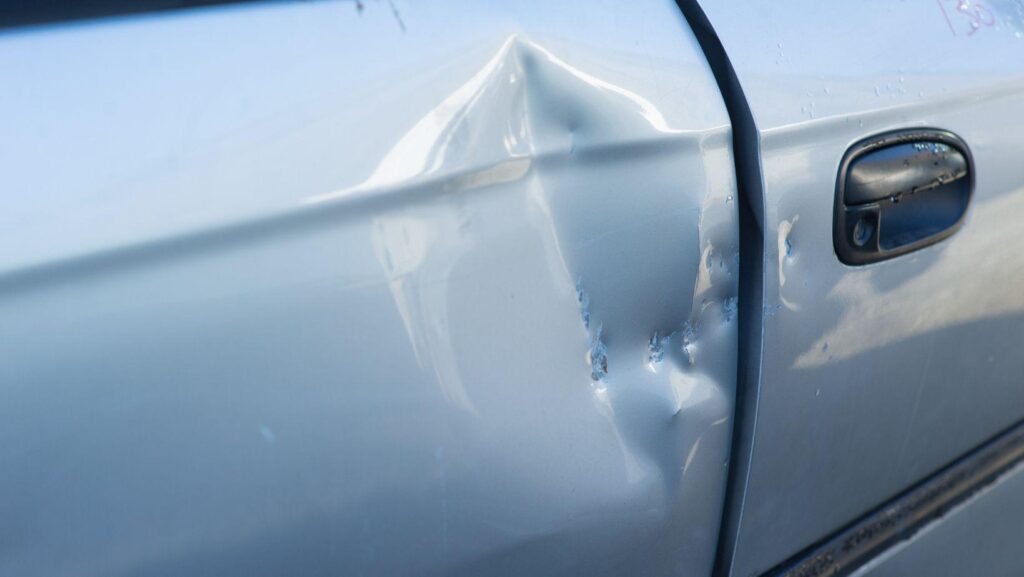
Collision repair shops face constant pressure to turn vehicles around faster without sacrificing the quality of the finished repair. For years, that tension pushed many shops toward panel replacement as the default response to anything beyond a minor cosmetic dent, since replacement offered a predictable outcome even if it cost more and took longer than a skilled repair might have. Modern automotive dent repair equipment has shifted that calculation considerably, giving technicians tools precise enough to restore damaged panels to original specification in a fraction of the time replacement would require, while keeping more of a vehicle’s original factory panels intact.
Why Panel Replacement Became the Default for So Long
Dent repair used to depend heavily on a technician’s individual skill with basic hand tools, hammers, dollies, and slide hammers that offered limited control over exactly how much force got applied and where. This unpredictability made panel replacement an appealing alternative for shops trying to guarantee consistent results, since swapping a damaged panel for a new one removed much of the variability that came with manual dent repair performed by technicians of varying skill levels.
This default toward replacement came with real costs that extended beyond the higher price of parts. Original factory panels carry specific metallurgical properties and factory coatings that a replacement part, even a high-quality one, doesn’t always fully replicate, particularly for panels involving complex stamping or high-strength steel components. Replacement also typically takes longer once sourcing, ordering, and installation time get factored in, compared to a well-executed repair that keeps the original panel in place and simply restores its shape.
How Modern Equipment Changes the Technical Approach
Contemporary dent repair equipment gives technicians considerably more control over the repair process than the hand tools of previous decades, incorporating features like adjustable pulling force, precise measurement systems, and attachment methods that let a technician target exactly the area that needs correction without disturbing surrounding, undamaged metal. This precision matters because dent repair fundamentally involves reversing a deformation in the metal, and the more accurately a technician can apply force to the specific point of damage, the cleaner the resulting repair tends to be.
Systems built around this precision typically combine a pulling or straightening mechanism with a measuring system that tracks the panel’s progress back toward its original shape in real time, rather than requiring a technician to rely purely on visual judgment throughout the repair. When comparing automotive dent repair equipment, shops should examine how each pulling, straightening, and measuring component supports the repair procedures they perform, including whether technicians can document progress instead of relying only on visual judgment.
Improving Technician Control Over Every Repair
Control over the repair process affects both the quality of the final result and how consistently a shop can deliver that quality across different technicians and different jobs. Equipment that offers finer adjustment of pulling force, more precise attachment points, and better visibility into the panel’s response as force is applied gives a technician the ability to make small corrections throughout a repair rather than committing to a single aggressive pull and hoping the outcome lands close to correct.
This level of control translates into several practical advantages during an actual repair:
- Reduced risk of overcorrecting a dent and creating a new, opposite deformation that requires additional correction.
- Better ability to work around structural features, body lines, and reinforcement points without disturbing them.
- More consistent outcomes across technicians with varying levels of individual experience.
- Fewer instances where a panel needs additional filler or refinishing work to mask an imperfect repair.
Shops that invest in equipment offering this kind of granular control often find that even less experienced technicians can achieve results closer to what previously required years of specialized hand-tool experience, since the equipment itself compensates for some of the judgment that used to depend entirely on individual skill.
Restoring Panels Efficiently Without Sacrificing Quality
Speed matters considerably in a collision repair environment where shop throughput directly affects revenue and where customers, insurers, and rental car costs all create pressure to complete repairs quickly. Modern dent repair equipment addresses this by reducing the time a skilled repair actually takes, not by cutting corners, but by giving technicians tools that reach the correct outcome more directly rather than through extended trial and error with less precise equipment.
This efficiency gain compounds when a shop can confidently choose repair over replacement for damage that previously would have defaulted to a parts swap. A repair that takes a fraction of the time replacement would require, while achieving a comparable or better final result, changes the economics of how a shop approaches damage assessment. Insurance adjusters and shop estimators increasingly factor this capability into their initial damage assessments, recognizing that modern equipment expands the range of damage that a skilled repair can address economically compared to what was true even a decade ago.
Reducing Unnecessary Panel Replacement
Every panel replaced rather than repaired represents a departure from the vehicle’s original factory construction, which carries implications beyond simple cost. Original panels maintain the exact metallurgical properties, corrosion protection, and structural characteristics the vehicle was engineered with, while aftermarket or even OEM replacement panels, however well manufactured, introduce a new component into a vehicle that wasn’t originally assembled that way. For vehicles where maintaining original condition matters, whether for resale value, warranty considerations, or simply preserving factory integrity, keeping the original panel through a quality repair carries genuine value beyond avoiding replacement cost.
Modern automotive dent repair equipment expands the range of damage a shop can confidently repair rather than replace, shifting the default decision point for many types of damage that would previously have gone straight to a parts order. This shift benefits vehicle owners through lower repair costs and faster turnaround, while also reducing the volume of replacement parts moving through the supply chain, a consideration that’s become more relevant as parts availability and lead times have grown less predictable in recent years.
Supporting Consistent Results Across a Shop’s Full Team
A shop’s reputation depends on consistent repair quality regardless of which technician handles a given vehicle, and modern equipment supports this consistency in ways that purely skill-dependent hand tools never could. Measurement systems built into contemporary equipment give technicians an objective standard to work toward, a documented target shape rather than a subjective visual judgment that might vary from one technician to the next based on individual experience and attention to detail.
This consistency also supports better training outcomes for newer technicians entering the field, since equipment that provides real-time feedback on repair progress functions as a built-in guide during the learning process, rather than leaving new technicians to develop judgment purely through years of trial and error on live vehicles. Shops investing in this kind of equipment often find it pays off not just in individual repair quality, but in how quickly newer team members can reach a consistent, reliable standard of work.
Final Analysis
Modern automotive dent repair equipment has fundamentally shifted what’s possible in collision repair, giving technicians the precision and control needed to restore damaged panels efficiently while keeping more original factory components intact. This capability reduces reliance on panel replacement for damage that a well-equipped shop can now repair confidently, benefiting vehicle owners through faster, less expensive repairs while preserving more of a vehicle’s original construction. As equipment manufacturers like Car-O-Liner continue refining the precision and measurement capabilities built into modern dent repair systems, the gap between what repair and replacement can each accomplish continues to narrow, giving shops more flexibility to choose the approach that genuinely serves each vehicle’s specific damage rather than defaulting to replacement out of technical necessity.